

Australia Carbon Credit Market 2026-2034: Size, Share and Outlook
Australia Carbon Credit Market
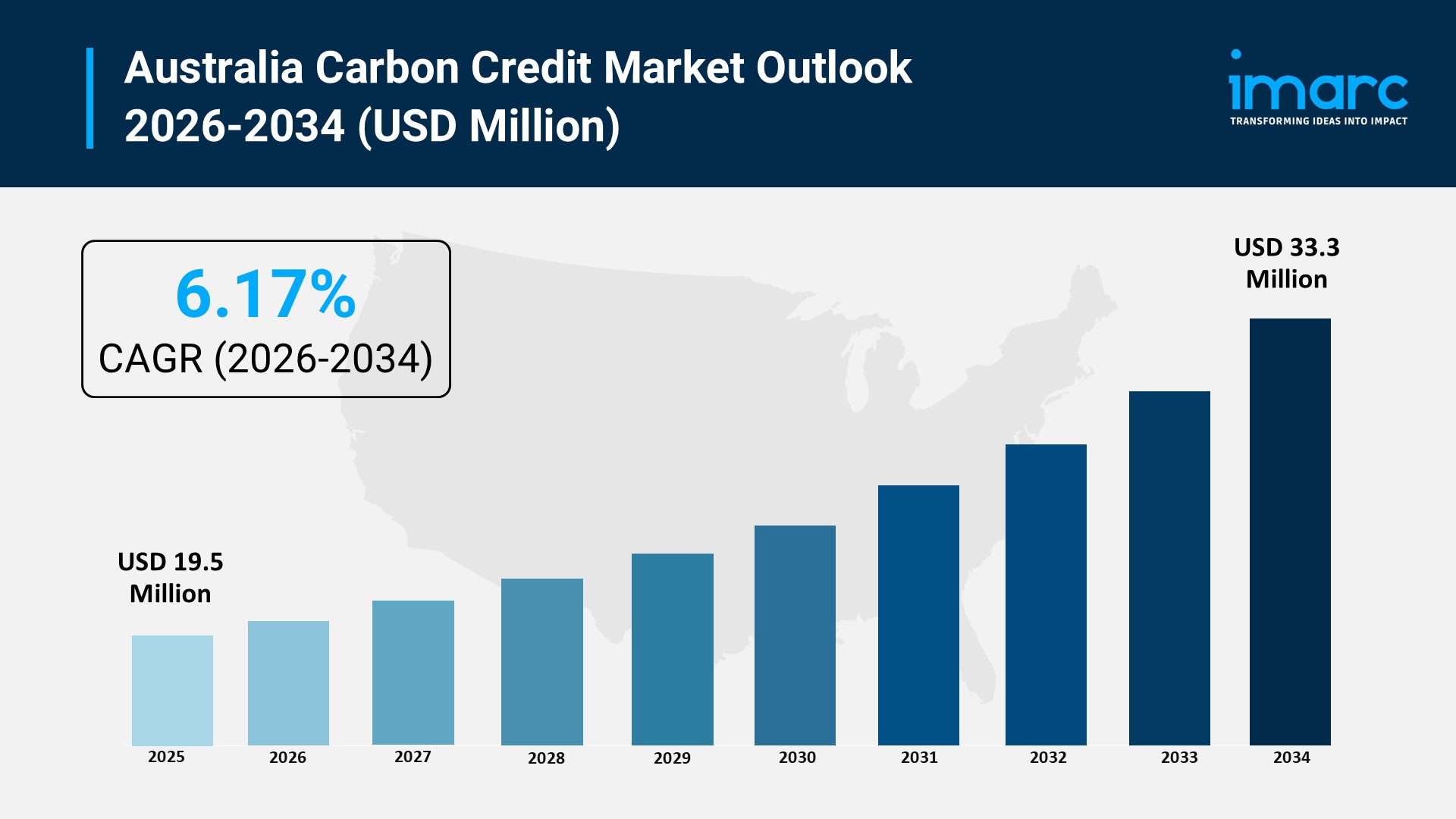
Australia carbon credit market size reached USD 19.5 Million in 2025 and is projected to reach USD 33.3 Million by 2034, growing at a CAGR of 6.17% 2026-2034.
AUSTRALIA, March 23, 2026 /EINPresswire.com/ -- 𝗠𝗮𝗿𝗸𝗲𝘁 𝗢𝘃𝗲𝗿𝘃𝗶𝗲𝘄Australia’s carbon credit market reached 𝟭𝟵.𝟱 𝗺𝗶𝗹𝗹𝗶𝗼𝗻 in 2025 and is forecast to grow to 𝟯𝟯.𝟯 𝗺𝗶𝗹𝗹𝗶𝗼𝗻 by 2034, at a 𝗖𝗔𝗚𝗥 𝗼𝗳 𝟲.𝟭𝟳% (𝟮𝟬𝟮𝟲–𝟮𝟬𝟯𝟰). The market stands out in the Asia-Pacific region for its strong structure, combining regulatory compliance systems with rising voluntary corporate participation. Carbon credits are generated through projects that reduce or capture emissions under approved government methodologies. With Australia targeting net-zero emissions by 2050 and tightening climate policies, the market is evolving into a key decarbonization tool, drawing investments from businesses, financial institutions, global buyers, and Indigenous stakeholders.
EY published their 2026 Australian Carbon Market Outlook on Feb 11 (5 weeks ago) — directly calling on investors to "engage early" and "stress-test portfolios"; Australia's Safeguard Mechanism now mandates 43% emissions reduction by 2030; EU CBAM definitive phase started Jan 1, 2026 creating cross-border carbon pricing pressure; AFMA + Carbon Market Institute just standardised ACCU OTC documentation making institutional trading easier than ever
𝗛𝗼𝘄 𝗔𝗜 𝗶𝘀 𝗥𝗲𝘀𝗵𝗮𝗽𝗶𝗻𝗴 𝘁𝗵𝗲 𝗔𝘂𝘀𝘁𝗿𝗮𝗹𝗶𝗮 𝗖𝗮𝗿𝗯𝗼𝗻 𝗖𝗿𝗲𝗱𝗶𝘁 𝗠𝗮𝗿𝗸𝗲𝘁?
Artificial intelligence is rapidly emerging as a transformative and indispensable force across the Australia carbon credit market, fundamentally reshaping how carbon projects are developed, monitored, verified, traded, and governed — delivering a new generation of precision, transparency, and scalability that is critical to sustaining market integrity and investor confidence as the ACCU ecosystem continues to mature and expand throughout the forecast period.
• 𝗔𝗜-𝗣𝗼𝘄𝗲𝗿𝗲𝗱 𝗖𝗮𝗿𝗯𝗼𝗻 𝗣𝗿𝗼𝗷𝗲𝗰𝘁 𝗠𝗼𝗻𝗶𝘁𝗼𝗿𝗶𝗻𝗴 𝗮𝗻𝗱 𝗦𝗮𝘁𝗲𝗹𝗹𝗶𝘁𝗲-𝗕𝗮𝘀𝗲𝗱 𝗩𝗲𝗿𝗶𝗳𝗶𝗰𝗮𝘁𝗶𝗼𝗻: Machine learning algorithms integrated with satellite imagery, LiDAR data, and remote sensing technologies are enabling the Australian Clean Energy Regulator and project developers to monitor vegetation coverage, biomass accumulation, soil carbon levels, and savanna fire patterns with unprecedented geographic precision — dramatically reducing the cost and time associated with on-ground verification while improving the accuracy and frequency of carbon stock assessments across Australia's vast and geographically challenging project landscapes in Northern Australia, Western Queensland, and the rangelands.
• 𝗣𝗿𝗲𝗱𝗶𝗰𝘁𝗶𝘃𝗲 𝗔𝗻𝗮𝗹𝘆𝘁𝗶𝗰𝘀 𝗳𝗼𝗿 𝗖𝗮𝗿𝗯𝗼𝗻 𝗣𝗿𝗼𝗷𝗲𝗰𝘁 𝗣𝗲𝗿𝗳𝗼𝗿𝗺𝗮𝗻𝗰𝗲 𝗮𝗻𝗱 𝗥𝗶𝘀𝗸 𝗔𝘀𝘀𝗲𝘀𝘀𝗺𝗲𝗻𝘁: AI-driven predictive modeling platforms are enabling carbon project developers, investors, and buyers to forecast future ACCU generation volumes based on climate variability, land management practices, and ecological conditions — enabling more informed investment decisions, more accurate carbon credit pricing, and more robust risk management frameworks for nature-based and technology-based carbon sequestration projects across diverse Australian biomes.
• 𝗕𝗹𝗼𝗰𝗸𝗰𝗵𝗮𝗶𝗻-𝗘𝗻𝗵𝗮𝗻𝗰𝗲𝗱 𝗖𝗮𝗿𝗯𝗼𝗻 𝗖𝗿𝗲𝗱𝗶𝘁 𝗥𝗲𝗴𝗶𝘀𝘁𝗿𝘆 𝗮𝗻𝗱 𝗧𝗿𝗮𝗰𝗲𝗮𝗯𝗶𝗹𝗶𝘁𝘆: AI-powered blockchain platforms — including the advanced registry infrastructure developed by Trovio Group for the Clean Energy Regulator — are improving the traceability, transparency, and fraud-resistance of ACCU issuance, transfer, and retirement records, ensuring that every carbon credit in the Australian market can be tracked with complete provenance certainty from project origin through to final buyer retirement, which is fundamental to sustaining the market's international credibility and meeting the high-integrity standards demanded by institutional buyers and global carbon market frameworks.
• 𝗔𝗜-𝗔𝘀𝘀𝗶𝘀𝘁𝗲𝗱 𝗖𝗮𝗿𝗯𝗼𝗻 𝗠𝗮𝗿𝗸𝗲𝘁 𝗣𝗿𝗶𝗰𝗲 𝗗𝗶𝘀𝗰𝗼𝘃𝗲𝗿𝘆 𝗮𝗻𝗱 𝗧𝗿𝗮𝗱𝗶𝗻𝗴 𝗔𝗻𝗮𝗹𝘆𝘁𝗶𝗰𝘀: AI-powered trading platforms and market analytics tools are enabling corporate buyers, brokers, and institutional investors to analyze ACCU price trends, forecast supply-demand dynamics, and optimize the timing and composition of carbon credit portfolio purchases — improving price discovery efficiency in a market that has historically been characterized by information asymmetry and limited liquidity relative to its growing strategic importance to Australian corporations managing Safeguard Mechanism compliance obligations.
• 𝗡𝗮𝘁𝘂𝗿𝗮𝗹 𝗟𝗮𝗻𝗴𝘂𝗮𝗴𝗲 𝗣𝗿𝗼𝗰𝗲𝘀𝘀𝗶𝗻𝗴 𝗳𝗼𝗿 𝗥𝗲𝗴𝘂𝗹𝗮𝘁𝗼𝗿𝘆 𝗖𝗼𝗺𝗽𝗹𝗶𝗮𝗻𝗰𝗲 𝗮𝗻𝗱 𝗘𝗦𝗚 𝗥𝗲𝗽𝗼𝗿𝘁𝗶𝗻𝗴: NLP-powered compliance tools are helping Australian corporations navigate the increasingly complex regulatory landscape surrounding carbon credits — automatically extracting, interpreting, and applying updates to Safeguard Mechanism baselines, ERF methodology requirements, and international climate reporting standards, while simultaneously streamlining the preparation of ESG disclosures and climate-related financial reporting under Australia's evolving mandatory climate disclosure frameworks.
• 𝗔𝗜-𝗘𝗻𝗵𝗮𝗻𝗰𝗲𝗱 𝗜𝗻𝗱𝗶𝗴𝗲𝗻𝗼𝘂𝘀 𝗟𝗮𝗻𝗱 𝗠𝗮𝗻𝗮𝗴𝗲𝗺𝗲𝗻𝘁 𝗮𝗻𝗱 𝗖𝗼𝗺𝗺𝘂𝗻𝗶𝘁𝘆 𝗖𝗮𝗿𝗯𝗼𝗻 𝗣𝗹𝗮𝗻𝗻𝗶𝗻𝗴: AI tools are being deployed in partnership with Indigenous communities across Australia's vast land estates to support cultural burning practice documentation, biodiversity monitoring, and carbon project planning — enabling communities to demonstrate measurable emissions reductions and sequestration outcomes with greater technical rigor while preserving the cultural integrity of traditional land management practices that underpin some of Australia's most ecologically significant and globally recognized carbon offset methodologies.
• 𝗠𝗮𝗰𝗵𝗶𝗻𝗲 𝗟𝗲𝗮𝗿𝗻𝗶𝗻𝗴 𝗳𝗼𝗿 𝗖𝗮𝗿𝗯𝗼𝗻 𝗣𝗲𝗿𝗺𝗮𝗻𝗲𝗻𝗰𝗲 𝗥𝗶𝘀𝗸 𝗮𝗻𝗱 𝗣𝗼𝗿𝘁𝗳𝗼𝗹𝗶𝗼 𝗠𝗮𝗻𝗮𝗴𝗲𝗺𝗲𝗻𝘁: AI-powered permanence risk modeling platforms are enabling carbon project developers and buyers to assess and manage the long-term reversal risks inherent in nature-based sequestration projects — including risks from bushfire, drought, and land use change — enabling more sophisticated carbon credit portfolio construction strategies that balance high-volume nature-based credits with technology-based credits offering greater permanence certainty, supporting the development of a more resilient and diversified ACCU market throughout the forecast period.
𝗥𝗲𝗾𝘂𝗲𝘀𝘁 𝗳𝗼𝗿 𝗮 𝘀𝗮𝗺𝗽𝗹𝗲 𝗿𝗲𝗽𝗼𝗿𝘁 𝗣𝗗𝗙: https://www.imarcgroup.com/australia-carbon-credit-market/requestsample
𝗠𝗮𝗿𝗸𝗲𝘁 𝗧𝗿𝗲𝗻𝗱𝘀 𝗮𝗻𝗱 𝗜𝗻𝘀𝗶𝗴𝗵𝘁𝘀
• Australia's Emissions Reduction Fund and Safeguard Mechanism together form the regulatory backbone of the nation's carbon credit market, with the Safeguard Mechanism's tightening baseline trajectories — mandating progressively lower emissions caps for Australia's approximately 215 largest industrial emitters across mining, energy, manufacturing, and transport sectors — creating an expanding and structurally assured compliance demand for ACCUs that is expected to intensify significantly as baselines decline at a rate of 4.9% annually, driving sustained and growing institutional procurement of high-quality carbon credits throughout the forecast period and cementing the compliance segment's role as the primary structural demand driver of market growth.
• Corporate voluntary sustainability commitments from Australia's leading corporations in mining, energy, agriculture, and financial services are creating a powerful and rapidly growing secondary demand layer for ACCUs beyond the compliance market, as businesses respond to intensifying ESG reporting requirements, investor pressure, customer expectations, and competitive pressure to demonstrate credible, science-aligned progress toward net-zero emissions targets — with an increasing number of major Australian corporations setting ambitious interim decarbonization milestones that require carbon credits as a bridging mechanism while long-term operational abatement programs are implemented.
• Australia's exceptional natural landscape — encompassing more than 770 million hectares of rangelands, agricultural land, native forests, and coastal ecosystems — provides a globally competitive and structurally unmatched endowment of carbon sequestration capacity, with nature-based offset methodologies including reforestation, vegetation management, soil carbon sequestration, blue carbon restoration, and savanna fire management collectively enabling the generation of high-integrity ACCUs that attract premium valuations from both domestic compliance buyers and international voluntary carbon market participants seeking credible, biodiversity-positive offsets.
• The growing participation of Indigenous communities across Australia's vast land estates — particularly across the Northern Territory, Western Australia, and Queensland — is emerging as a defining and strategically significant feature of the Australian carbon credit landscape, as traditional landowners leverage cultural burning practices, savanna management techniques, and deep ecological knowledge to generate ACCUs that deliver simultaneously compelling carbon abatement, biodiversity conservation, and community economic development outcomes that resonate strongly with international buyers seeking high co-benefit carbon credits aligned with global biodiversity frameworks and Indigenous rights principles.
• International trade dynamics are playing an increasingly important role in shaping the Australian carbon credit market, with the country's proximity to carbon-active Asian markets — including Japan, South Korea, Singapore, and increasingly China — combined with the export credibility of ACCUs under international climate frameworks, creating significant commercial opportunities for Australian project developers and landholders to access premium international demand corridors that can support higher credit valuations and more diverse revenue streams beyond the domestic compliance market.
• Financial sector engagement with the Australian carbon credit market has undergone a fundamental transformation, with banks, superannuation funds, private equity investors, and impact investment vehicles increasingly viewing ACCUs as a credible and strategically attractive asset class that offers both financial returns and measurable environmental impact credentials — driving a significant expansion in the availability of project development finance, forward purchase agreements, and structured carbon investment products that are collectively enhancing the market's liquidity, price transparency, and long-term stability.
• The Clean Energy Regulator's December 2023 contract with Trovio Group to develop a new Unit and Certificate Register — consolidating the registries for ACCUs, Large-scale Generation Certificates (LGCs), and other environmental instruments — represents a landmark investment in the digital infrastructure underpinning market transparency and operational integrity, and signals the government's commitment to building a world-class carbon credit market administration system capable of supporting the expanded transaction volumes, product complexity, and international interoperability requirements that the market will encounter throughout the forecast period.
𝗠𝗮𝗿𝗸𝗲𝘁 𝗚𝗿𝗼𝘄𝘁𝗵 𝗗𝗿𝗶𝘃𝗲𝗿𝘀
𝗚𝗼𝘃𝗲𝗿𝗻𝗺𝗲𝗻𝘁 𝗣𝗼𝗹𝗶𝗰𝘆 𝗙𝗿𝗮𝗺𝗲𝘄𝗼𝗿𝗸𝘀, 𝗦𝗮𝗳𝗲𝗴𝘂𝗮𝗿𝗱 𝗠𝗲𝗰𝗵𝗮𝗻𝗶𝘀𝗺 𝗧𝗶𝗴𝗵𝘁𝗲𝗻𝗶𝗻𝗴, 𝗮𝗻𝗱 𝗖𝗼𝗿𝗽𝗼𝗿𝗮𝘁𝗲 𝗡𝗲𝘁-𝗭𝗲𝗿𝗼 𝗖𝗼𝗺𝗺𝗶𝘁𝗺𝗲𝗻𝘁𝘀
Australia’s carbon credit market is driven by two reinforcing demand forces: regulatory compliance and rising voluntary corporate action. The Safeguard Mechanism, with annual baseline reductions of 4.9% for around 215 major emitters, is steadily increasing the cost of emissions, pushing companies to adopt ACCUs as a practical compliance solution while transitioning to long-term abatement strategies. On the supply side, the Emissions Reduction Fund supports credit generation by incentivizing projects across agriculture, land use, and waste management. At the same time, voluntary demand is accelerating as corporations in sectors like mining, energy, aviation, and finance commit to net-zero targets. This shift is fueled by investor expectations, consumer accountability, and global trade policies favoring low-carbon operations. Together, these compliance and voluntary dynamics are establishing a strong structural foundation for sustained long-term growth in Australia’s ACCU market.
𝗔𝘂𝘀𝘁𝗿𝗮𝗹𝗶𝗮'𝘀 𝗡𝗮𝘁𝘂𝗿𝗮𝗹 𝗥𝗲𝘀𝗼𝘂𝗿𝗰𝗲 𝗘𝗻𝗱𝗼𝘄𝗺𝗲𝗻𝘁, 𝗜𝗻𝗱𝗶𝗴𝗲𝗻𝗼𝘂𝘀 𝗟𝗮𝗻𝗱 𝗣𝗮𝗿𝘁𝗶𝗰𝗶𝗽𝗮𝘁𝗶𝗼𝗻, 𝗮𝗻𝗱 𝗙𝗶𝗻𝗮𝗻𝗰𝗶𝗮𝗹 𝗦𝗲𝗰𝘁𝗼𝗿 𝗘𝗻𝗴𝗮𝗴𝗲𝗺𝗲𝗻𝘁
Australia’s vast and biodiverse natural landscape — spanning rangelands, agricultural areas, forests, and coastal ecosystems — positions it as a leading global supplier of high-quality, nature-based carbon credits. These projects not only deliver verified carbon sequestration but also provide significant ecological benefits. A key differentiator is the growing involvement of Indigenous communities, whose participation enhances cultural, environmental, and social value, attracting premium demand from international buyers seeking credits with strong co-benefits. At the same time, increasing participation from banks, superannuation funds, and impact investors is boosting market liquidity and supporting the development of structured ACCU investment products. This financial backing is easing project development and expanding supply. Together, Australia’s natural advantages, Indigenous engagement, stronger financial support, and rising global demand are shaping a more sophisticated and globally relevant carbon credit market, expected to achieve sustained growth through 2026–2034.
𝗠𝗮𝗿𝗸𝗲𝘁 𝗦𝗲𝗴𝗺𝗲𝗻𝘁𝗮𝘁𝗶𝗼𝗻
IMARC Group's research categorizes the Australia carbon credit market as follows:
𝗕𝘆 𝗧𝘆𝗽𝗲:
• Compliance
• Voluntary
• Attractive Investment Proposition by Type
𝗕𝘆 𝗣𝗿𝗼𝗷𝗲𝗰𝘁 𝗧𝘆𝗽𝗲:
• Avoidance/Reduction Projects
• Removal/Sequestration Projects — Nature-based, Technology-based
• Attractive Investment Proposition by Project Type
𝗕𝘆 𝗘𝗻𝗱-𝗨𝘀𝗲:
• Power
• Energy
• Industrial
• Aviation
• Transportation
• Buildings
• Others
𝗕𝘆 𝗥𝗲𝗴𝗶𝗼𝗻:
• Australia Capital Territory & New South Wales
• Victoria & Tasmania
• Queensland
• Northern Territory & Southern Australia
• Western Australia
𝗞𝗲𝘆 𝗣𝗹𝗮𝘆𝗲𝗿𝘀
The competitive landscape of the Australia carbon credit market includes a comprehensive analysis of key player positioning, market structure, top winning strategies, competitive dashboards, and company evaluation quadrants. Detailed profiles of all major companies are provided within the full IMARC Group research report.
𝗥𝗲𝗰𝗲𝗻𝘁 𝗡𝗲𝘄𝘀 𝗮𝗻𝗱 𝗗𝗲𝘃𝗲𝗹𝗼𝗽𝗺𝗲𝗻𝘁𝘀
𝗔𝗽𝗿𝗶𝗹 𝟮𝟬𝟮𝟱: The ACCU market saw mid-month volatility in April, dominated by developments in the federal election campaign and updates on Safeguard Mechanism Credit (SMC) issuances. A bullish sentiment ultimately prevailed, driving Generic spot prices to AU$35.05 at April's close — AU$2.05 higher month-on-month, the first price rise since late 2024.
The Clean Energy Regulator released detailed data behind the first SMC issuance, revealing that Shell's Prelude FLNG Facility was the single largest recipient with 1.078 million credits, followed by the Bowen Basin's Capcoal Mine (Anglo American and Mitsui Resources) with 1.023 million credits. Coal entities comprised a substantial portion of the total, with a quarter of the more than 8 million SMCs issued to facilities run by Shell and Anglo American.
𝗝𝘂𝗻𝗲 𝟮𝟬𝟮𝟱: The Australian government launched a new modelling tool — SavCAM — to support more consistent accounting under two upcoming Savanna Fire Management methods. Forward market activity doubled in June to 560,000 units, with parcels exchanged across tenors from July 2025 through to November 2026, all executed at premiums to prevailing spot levels.
𝗝𝘂𝗹𝘆 𝟮𝟬𝟮𝟱: July marked a sharp reversal in ACCU market volumes, with 4.2 million ACCUs exchanged — an 87% increase on June's total and the second-highest monthly volume since November 2024's peak of 4.38 million.
On 18 July 2025, the Clean Energy Regulator published the final stage of transparency changes to the ACCU project register, including the type of estimation or modelling approach used by each project to calculate carbon abatement and the model start date for each carbon estimation area.
𝗔𝘂𝗴𝘂𝘀𝘁 𝟮𝟬𝟮𝟱: On 12 August 2025, the Clean Energy Regulator approved the first project under the Nature Repair Market. On 14 August 2025, DCCEEW released public consultation material on two new Savanna Fire Management methods — for the first time, proposing to account for sequestered carbon in living and dead biomass, enabled by improvements in scientific modelling.
𝗦𝗲𝗽𝘁𝗲𝗺𝗯𝗲𝗿 𝟮𝟬𝟮𝟱: Data from the Clean Energy Regulator's quarterly report showed that ACCU issuances in the first half of 2025 reached a record 9.5 million units, keeping total issuance on track for a projected 19–24 million ACCUs by year-end, signalling strong market activity and participation in carbon offset projects.
𝗡𝗼𝘃𝗲𝗺𝗯𝗲𝗿 𝟮𝟬𝟮𝟱: Santos achieved a record carbon credit allocation at its Moomba CCS project, receiving 614,133 Australian Carbon Credit Units (ACCUs) from the Clean Energy Regulator for emissions reductions between September 2024 and March 2025 — the largest single award of credit units to date.
𝗗𝗲𝗰𝗲𝗺𝗯𝗲𝗿 𝟮𝟬𝟮𝟱: Australia announced a decision to permanently unlock millions of ACCUs from multi-year government contracts. Companies with active carbon abatement contracts (CACs) covering a combined remaining volume of around 84 million ACCUs will be able to exit their agreements if they deliver at least 25% of outstanding contracted volumes, in exchange for a 60% discount on their exit payment. Interested companies must submit expressions of interest by 30 June 2026, with permanent exit arrangements starting on 1 July 2026.
𝗡𝗼𝘁𝗲: 𝗜𝗳 𝘆𝗼𝘂 𝗿𝗲𝗾𝘂𝗶𝗿𝗲 𝗮𝗻𝘆 𝘀𝗽𝗲𝗰𝗶𝗳𝗶𝗰 𝗶𝗻𝗳𝗼𝗿𝗺𝗮𝘁𝗶𝗼𝗻 𝘁𝗵𝗮𝘁 𝗶𝘀 𝗻𝗼𝘁 𝗰𝗼𝘃𝗲𝗿𝗲𝗱 𝗰𝘂𝗿𝗿𝗲𝗻𝘁𝗹𝘆 𝘄𝗶𝘁𝗵𝗶𝗻 𝘁𝗵𝗲 𝘀𝗰𝗼𝗽𝗲 𝗼𝗳 𝘁𝗵𝗲 𝗿𝗲𝗽𝗼𝗿𝘁, 𝘄𝗲 𝘄𝗶𝗹𝗹 𝗽𝗿𝗼𝘃𝗶𝗱𝗲 𝘁𝗵𝗲 𝘀𝗮𝗺𝗲 𝗮𝘀 𝗮 𝗽𝗮𝗿𝘁 𝗼𝗳 𝘁𝗵𝗲 𝗰𝘂𝘀𝘁𝗼𝗺𝗶𝘇𝗮𝘁𝗶𝗼𝗻.
𝗕𝗿𝗼𝘄𝘀𝗲 𝘁𝗵𝗲 𝗳𝘂𝗹𝗹 𝗿𝗲𝗽𝗼𝗿t 𝘄𝗶𝘁𝗵 𝗧𝗢𝗖 𝗮𝗻𝗱 𝗹𝗶𝘀𝘁 𝗼𝗳 𝗳𝗶𝗴𝘂𝗿𝗲𝘀: https://www.imarcgroup.com/australia-carbon-credit-market
𝗢𝘁𝗵𝗲𝗿 𝗠𝗮𝗿𝗸𝗲𝘁 𝗥𝗲𝗽𝗼𝗿𝘁𝘀 𝗯𝘆 𝗜𝗠𝗔𝗥𝗖 𝗚𝗿𝗼𝘂𝗽:
𝗔𝘂𝘀𝘁𝗿𝗮𝗹𝗶𝗮 𝗖𝗼𝗮𝗹 𝗠𝗮𝗿𝗸𝗲𝘁: https://www.imarcgroup.com/australia-coal-market
𝗔𝘂𝘀𝘁𝗿𝗮𝗹𝗶𝗮 𝗪𝗶𝗻𝗱 𝗘𝗻𝗲𝗿𝗴𝘆 𝗠𝗮𝗿𝗸𝗲𝘁: https://www.imarcgroup.com/australia-wind-energy-market
𝗔𝘂𝘀𝘁𝗿𝗮𝗹𝗶𝗮 𝗥𝗲𝗻𝗲𝘄𝗮𝗯𝗹𝗲 𝗘𝗻𝗲𝗿𝗴𝘆 𝗠𝗮𝗿𝗸𝗲𝘁: https://www.imarcgroup.com/australia-renewable-energy-market
𝗔𝘂𝘀𝘁𝗿𝗮𝗹𝗶𝗮 𝗢𝗳𝗳𝘀𝗵𝗼𝗿𝗲 𝗪𝗶𝗻𝗱 𝗣𝗼𝘄𝗲𝗿 𝗠𝗮𝗿𝗸𝗲𝘁: https://www.imarcgroup.com/australia-offshore-wind-power-market
𝗔𝗯𝗼𝘂𝘁 𝗨𝘀
IMARC Group is a global management consulting firm that helps the world's most ambitious changemakers to create a lasting impact. The company provides a comprehensive suite of market entry and expansion services. IMARC offerings include thorough market assessment, feasibility studies, company incorporation assistance, factory setup support, regulatory approvals and licensing navigation, branding, marketing and sales strategies, competitive landscape and benchmarking analyses, pricing and cost research, and procurement research.
𝗖𝗼𝗻𝘁𝗮𝗰𝘁 𝗨𝘀
𝗜𝗠𝗔𝗥𝗖 𝗚𝗿𝗼𝘂𝗽
134 N 4th St., Brooklyn, NY 11249, USA
𝗘𝗺𝗮𝗶𝗹: sales@imarcgroup.com
𝗧𝗲𝗹. 𝗡𝗼.: (D) +91 120 433 0800
𝗨𝗻𝗶𝘁𝗲𝗱 𝗦𝘁𝗮𝘁𝗲𝘀: +1-201-971-6302
Elena Anderson
IMARC Services Private Limited
201-971-6302
sales@imarcgroup.com
Visit us on social media:
LinkedIn
Instagram
Facebook
X
Legal Disclaimer:
EIN Presswire provides this news content "as is" without warranty of any kind. We do not accept any responsibility or liability for the accuracy, content, images, videos, licenses, completeness, legality, or reliability of the information contained in this article. If you have any complaints or copyright issues related to this article, kindly contact the author above.
